
by Daniel Dahlinger
Engineering is a diverse and rapidl
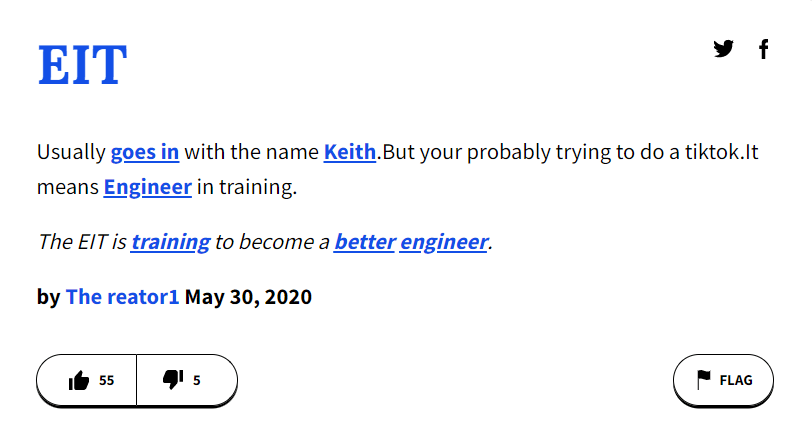
y evolving field that plays a critical role in shaping our world. As such, it’s essential for young professionals to stay competitive in the job market and stay on top of the latest industry trends and practices. One way to demonstrate your knowledge and commitment to the field beyond getting your engineering degree is by obtaining an Engineer-in-Training (EIT) certification. In this article, we’ll explore why getting an EIT is important and how you can prepare for the Fundamentals of Engineering (FE) exam, the first step towards gaining a Professional Engineer (PE) License.
The Importance of an EIT Certification An EIT certification is an official recognition that a young professional has completed a rigorous education and training program in engineering fundamentals. Obtaining an EIT certification demonstrates a level of competence and dedication that can help open doors to job opportunities and career advancement. It’s also a necessary step towards obtaining a PE License, which is required for certain engineering roles that directly impact public health and safety.
Preparing for the Fundamentals of Engineering Exam The FE exam is the first step towards obtaining an EIT certification. This exam is designed to assess the knowledge and skills of young engineering professionals in a variety of disciplines, including civil, mechanical, electrical, and chemical engineering. The exam consists of multiple-choice questions and is offered in a computer-based format. The exam is typically offered twice a year, in April and October (this is the case for me in Texas), and the registration fee varies depending on the state or jurisdiction where the exam is being taken.
Preparing for the FE exam can appear like a daunting task, but there are many resources available to help young professionals succeed. The best time to take the exam is as soon as possible. The closer that you take it to your graduation date, the better. Additionally, there are numerous study guides, practice tests, and review courses available both online and in-person. The National Council of Examiners for Engineering and Surveying (NCEES) provides a variety of (paid) resources to help young professionals prepare for the FE exam, including a comprehensive exam specification guide and practice exams. The NCEES also publishes pass rates for the FE exam on its website (https://ncees.org/engineering/fe/pass-rates/), which can be a useful benchmark for young professionals to gauge their preparedness. Additionally, with a little bit of creativity, I’m sure you can find some free resources (wink wink nudge nudge send me an email.)
Pass Rates for the FE Exam According to the NCEES, the average pass rate for the FE exam across all disciplines in 2021 was 74%. However, pass rates can vary depending on the discipline, with some disciplines having higher or lower pass rates than others. For example, the pass rate for the mechanical engineering discipline was 75%, while the pass rate for the electrical and computer engineering discipline was 66%. It’s important to note that the pass rate is not a reflection of the difficulty of the exam, but rather an indication of the preparedness of the test takers. And in my opinion, if you start preparing either while in school or right after graduating, with a few weeks of familiarizing yourself with the format of the questions and the exam reference guide, you’ll be exceptionally well prepared.
In conclusion, obtaining an EIT certification and eventually a PE License is a critical step in advancing your engineering career and demonstrating your knowledge and dedication to the field. Although preparing for the FE exam can SEEM challenging, there are many resources available to help you succeed. By taking advantage of these resources and preparing diligently, you can increase your chances of passing the exam and opening doors to exciting career opportunities.
Interested in paid resources? See non-affiliate links below (wink wink nudge nudge if you run one of these paid places PAY ME):
- NCEES FE Exam Prep Materials: The National Council of Examiners for Engineering and Surveying (NCEES) offers a variety of exam prep materials, including practice exams, review courses, and study guides. You can find them all here: https://ncees.org/engineering/fe/prep-materials/.
- PPI2Pass: PPI2Pass offers a variety of study materials, including review courses, practice exams, and flashcards. You can find their FE exam prep materials here: https://ppi2pass.com/fe-exam.
- School of PE: School of PE offers online and on-demand review courses for the FE exam.
Not sure if you meet the eligibility requirements? Check your state’s professional engineering website:
- Alabama: https://bels.alabama.gov/
- Alaska: https://www.commerce.alaska.gov/web/cbpl/ProfessionalLicensing/ProfessionalEngineers.aspx
- Arizona: https://engineers.az.gov/
- Arkansas: https://www.pels.arkansas.gov/
- California: https://www.bpelsg.ca.gov/
- Colorado: https://dpo.colorado.gov/AES/Engineers
- Connecticut: https://portal.ct.gov/DPH/Practitioner-Licensing–Investigations/Engineers/Engineers
- Delaware: https://dape.org/
- Florida: https://fbpe.org/
- Georgia: https://sos.ga.gov/index.php/licensing/plb/31
- Hawaii: https://cca.hawaii.gov/pvl/boards/engineers/
- Idaho: https://ibol.idaho.gov/IBOL/BoardPage.aspx?Bureau=PEL&PkgID=PEL
- Illinois: https://www.idfpr.com/profs/PE.asp
- Indiana: https://www.in.gov/pla/pe.htm
- Iowa: https://plb.iowa.gov/board/engineers-land-surveyors
- Kansas: https://www.ksbtp.ks.gov/
- Kentucky: https://pels.ky.gov/
- Louisiana: https://www.lapels.com/
- Maine: https://www.maine.gov/pfr/professionallicensing/professions/engineers/index.html
- Maryland: https://www.dllr.state.md.us/license/pe/
- Massachusetts: https://www.mass.gov/orgs/board-of-registration-of-professional-engineers-and-land-surveyors
- Michigan: https://www.michigan.gov/lara/0,4601,7-154-89334_72600_72603_27529_27542—,00.html
- Minnesota: https://mn.gov/aelslagid/boards/peel/
- Mississippi: https://www.pepls.state.ms.us/
- Missouri: https://pr.mo.gov/engineers.asp
- Montana: https://boards.bsd.dli.mt.gov/pel
- Nebraska: https://ea.nebraska.gov/
- Nevada: https://nvbpels.org/
- New Hampshire: https://www.oplc.nh.gov/engineers/index.htm
- New Jersey: https://www.njconsumeraffairs.gov/pels/Pages/default.aspx
- New Mexico: https://www.sblpes.state.nm.us/
- New York: https://www.op.nysed.gov/prof/pels/
- North Carolina: https://www.ncbels.org/
- North Dakota: https://www.ndpelsboard.org/
- Ohio: https://www.peps.ohio.gov/
- Oklahoma: https://www.ok.gov/pels/index.html
- Oregon: https://www.oregon.gov/boee/Pages/default.aspx
- Pennsylvania: https://www.dos.pa.gov/ProfessionalLicensing/BoardsCommissions/EngineersLandSurveyorsandGeologists/Pages/default.aspx
- Rhode Island: https://www.bdp.ri.gov/professions/engineers/
- South Carolina: https://llr.sc.gov/pels/
- South Dakota: https://dlr.sd.gov/engineers/
- Tennessee: https://www.tn.gov/commerce/regboards/pe.html
- Texas: https://pels.texas.gov/
Broken link? Let me know at daniel@ENGRingSuccess.com

 ENGineeRing Success Podcast