Daniel is a Mechanical Engineering graduate of Trinity University’s B.S. in Engineering Science and currently works in Commercial Management in the Engineering and Construction Consulting Industry.
All views expressed on this podcast are his own and do not reflect the opinions or views of his employer.
4. How Does the Civil Engineering World Feel About (Engineers Who Don’t Get a P.E.)
Don’t miss a blog post or a podcast episode, subscribe to my newsletter on www.ENGRingSuccess.com Support the on podcast on Spotify or on Patreon:
This is a little bit of a one-off episode but I ran into something interesting amidst my usual reddit doom scroll for podcast content. Scams are getting more sophisticated and unfortunately, they’re targeting job seekers. I cover the most common job-related scams going on right now in this episode. Watch this episode if you’re on the prowl for a job and send it to someone you know who’s searching for a job!
Don’t miss a blog post or a podcast episode, subscribe to my newsletter on www.ENGRingSuccess.com Support the on podcast on Spotify or on Patreon:
Every project starts with a piece of land, and a site investigation, and some geotech, and getting approval to build the project on the land. If you’ve ever been interested in how that process works, and how one can grow into a fruitful career in land development, you NEED to listen to this episode!
Thanks Joshua for stopping by!
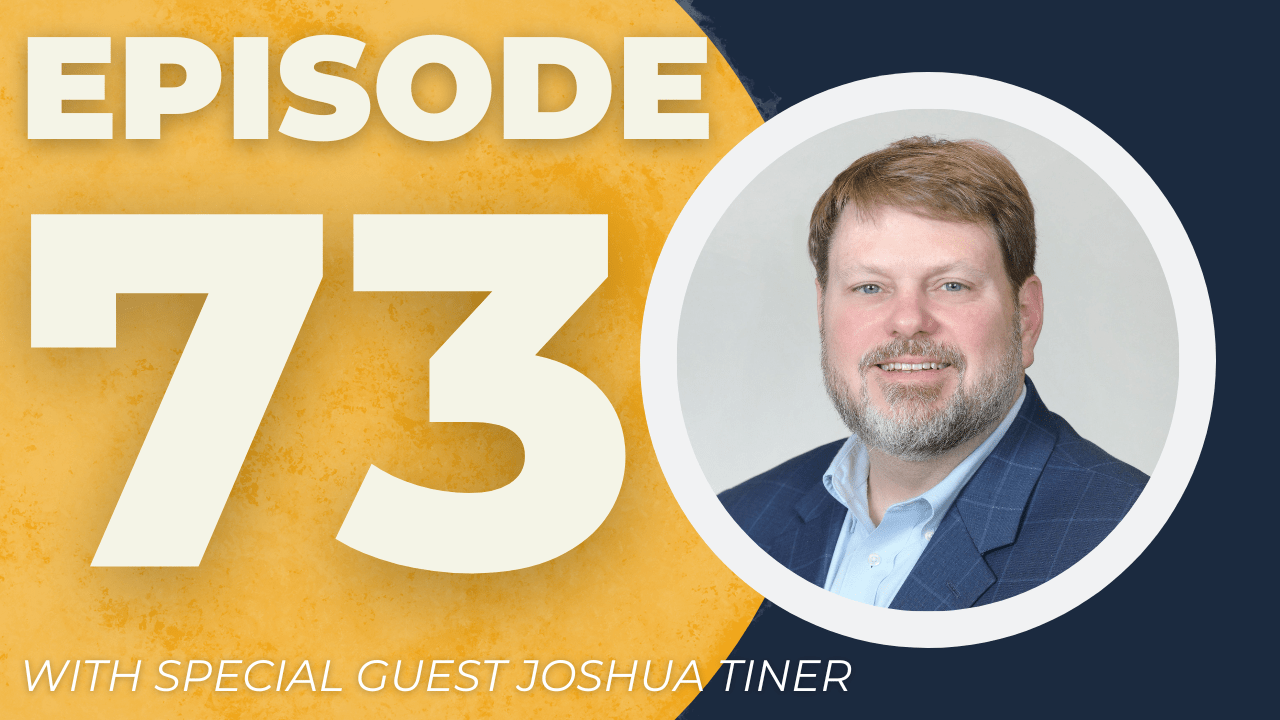
Joshua Tiner graduated with his B.S. in Civil Engineering from Penn State University, and in the 30 years since, he’s collected a vast wealth of experience in delivering projects from concept to completion. Josh is the vice president of engineering at REDCOM, an award winning full-service commercial architectural design, engineering and commercial contracting company operating in the New Jersey and surrounding areas. Josh also contributes to our industry as a published author of continuing education courses. I’m so excited to interview him on today’s episode of Engineering Success to learn more about Josh’s journey from EIT pursuing his P.E. to VP leading engineering delivery!
I had such a wonderful time interviewing Joshua and hope you enjoy listening to this interview as much as I enjoyed hosting it!
REDCOM is an award winning, full-service commercial architectural design, engineering, and construction company operating in New Jersey and the surrounding areas since 1982. REDCOM can take a project from concept to completion, offering comprehensive services that encompass every stage of a project.
Everything we build from relationships to structures, is built with an uncompromising commitment to creativity and a passion for excellence.
Daniel is a Mechanical Engineering graduate of Trinity University’s B.S. in Engineering Science and currently works in Commercial Management in the Engineering and Construction Consulting Industry.
All views expressed on this podcast are his own and do not reflect the opinions or views of his employer.
Randy Lyman, The Purpose-Driven Leader, combines decades of business experience with a deep commitment to fostering emotional intelligence, spiritual grounding, and transformational leadership. His area of expertise is leading from a place of strength through vulnerability, creating cultures where authenticity and emotional connection drive high performance.
I had such a wonderful time interviewing Randy and hope you enjoy listening to this interview as much as I enjoyed hosting it!
His book, The Third Element, which was released on March 19, 2025, makes these complex concepts accessible and actionable. It reveals the missing piece in manifestation that most people overlook—emotions. Randy teaches how unhealed emotional patterns can secretly shape our reality and how to transform them into a powerful tool for attracting abundance and fulfillment.
His own pivotal moment came after achieving material success but recognizing the emotional disconnection and stress that limited both his potential and his team’s. This awakening led him to focus on emotional awareness and belonging, which became the catalyst for dramatic business growth and renewed purpose.
Today, Randy shares his principles with individuals and organizations seeking clarity, connection, and authentic transformation. His teachings equip others to harness emotional intelligence, build meaningful relationships, and turn inner healing into outward success.
Daniel is a Mechanical Engineering graduate of Trinity University’s B.S. in Engineering Science and currently works in Commercial Management in the Engineering and Construction Consulting Industry.
All views expressed on this podcast are his own and do not reflect the opinions or views of his employer.
Hey friends, I recorded this episode over the Fourth of July weekend while I was horrified watching the devastation unfolding in Kerrville. Since then, I’ve learned that my alma mater was impacted, as one of my fellow Trinity Tigers, and the daughter of one of our football coaches passed in the floods.
My heart goes out to the people of Kerrville, and especially to my best friend, Emily Peter and her fiancé Dan Navarro who have been tirelessly working to help their community rebuild since the tragic flooding.
This episode is dedicated to my friends, the deceased, and their families.
Thank you to my top tier supporters, Jon Ott and Leroy Jenkins, this would not be possible without your support
Episode Description
Listen to this episode if you: are an early career engineer, are contemplating a career change, or just like engineering career stories.
I’m in the 11th grade and want to become a engineer, but don’t want to do physics 12 because I struggled this year. Is there any type of degree or something similar to engineering I can do that skips out on physics?
If I can’t skip out on it, I also want to know what the best type of engineering is to go into regardless of the work.
Im a 2nd year engineering student after switching from being in a BSc in my first year. I’m in a mix of first and 2nd year courses and i’m in environmental engineering but haven’t taken any discipline specific courses. I was in class recently and realized that I hate pretty much all of classes and find them very boring. I have no passion for anything we’re learning despite me doing quite well in most of my classes. Is this normal? does it get better?
As a current undergrad intern, I recently attended a presentation by a PhD student who came to our company whose technical knowledge was far beyond mine. It made me wonder how technically proficient companies expect interns to be. I’m concerned I might be letting my managers down because my skills aren’t yet at that level.
Hey y’all! I’m going to be spending my summer (starting next week) working as an intern for a relatively large radio company. I’m really excited for my role, and I think the work will be super interesting. I plan on putting 110% effort into my work, but I’m a little worried about not being the perfect employee, as I’m looking for a return offer after this intership.
I wanted to go fly out and visit my boyfriend in another state a few times throughout the summer for the weekend. Do y’all think it would be unacceptable for an intern to take maybe 3 Fridays off (spaced out over 12 weeks, probably once a month) for the purpose of travel? I’m even a little worried to ask my boss for fear of being seen as bad/lazy or anything like that.
Hi, I am a recent graduate with my degree in mechanical engineering. This is my first job outta college and I started a construction job as a field engineer. The pay is fabulous but the hours are horrendous and I dislike my boss.
Today he took me and another new hire out for lunch, it was a nice Amish owned restaurant that serves lunch and canned goods. My boss would frequently comment about how the Amish women were uncleanly and gross, and he says he dislikes “ being served food by a woman with hairy legs.”
For reference I have worked in the oil fields and I am used to men making crass comments or jokes in poor taste. But I was hoping that this would be a job that would be a bit friendlier to me as a woman because before I interviewed I got a call from the HR at this company telling me that this is a good company to work at as a woman.
I know this would be something I should go to HR about but like…. I kinda just wanna quit and not look back. I’m living at home with my parents rn and I don’t have any huge financial obligations.
I’m looking for any wise words or clear path forward.
I’m starting a new job on Monday and it’s in chemical manufacturing. Maybe I’m overthinking it, but I was wondering if wearing my engagement ring would lead to judgement/not being taken seriously? I only say this because I’ve heard lots about married women having bias against them because they’re seen as unable to commit fully to work.
Also, I’m not sure just yet as to how much hands on work there’ll be and if wearing it would risk damage/loss. Has anyone had experience with this? I’m a chemical engineer for reference.
Anyone wish they were just a Drafter sometimes? I miss the time when I was drafting and work was straightforward and mindless – now, I have a lot more to do and spend a good amount of time telling drafters how things should be shown.
Is it just laziness or am I in the wrong career/position? I like the idea of logging out and enjoying my personal life, remote work, and minimal coordination, writing and meetings. Walking around as a mailman seems fun to me.
I am not sure how many drafters/designers there are on this sub, but curious about your hours, pay and input.
I’ll try to be more clear than the title. From what I have seen at firms, engineers in a similar role at a firm are all generally paid the same, and there is not much room for personalization of a salary. For example, one project manager may be taking on a lot of responsibility and having a great impact on their project, while another project manager may be struggling to stay afloat. If these two project managers have the same YOE, certs, etc., they would be getting paid the same despite one having a larger impact. I am thinking, is this because there’s no justification for the client to pay a higher billing rate when on paper the company will sell these two engineers as the same? And so, the company will then say since billing rates are the same, the salary for the two engineers must be the same too.
Am I thinking about this wrong? Or is this not widespread and only exists at firms I’ve worked at? Thanks!
Don’t miss a blog post or a podcast episode, subscribe to my newsletter on www.ENGRingSuccess.comSupport the on podcast on Spotify or on Patreon:
Daniel is a Mechanical Engineering graduate of Trinity University’s B.S. in Engineering Science and currently works in Commercial Management in the Engineering and Construction Consulting Industry. All views expressed on this podcast are his own and do not reflect the opinions or views of his employer. Music by Maxgotthetracks: https://open.spotify.com/artist/0Pclog68AY
Check out this mailbag episode of the podcast. As always, questions addressed with links to the original posts below. Love you all! Thanks for the support and please consider sharing the podcast with one friend today 🙂
Don’t miss a blog post or a podcast episode, subscribe to my newsletter on www.ENGRingSuccess.comSupport the on podcast on Spotify or on Patreon:
Don’t miss a blog post or a podcast episode, subscribe to my newsletter on www.ENGRingSuccess.comSupport the on podcast on Spotify or on Patreon:
My guest on todays episode of the podcast is a Mechanical Engineering graduate of the Massachusetts Institute of Technology (MIT) and started her career designing components of the International Space Station. Yeah… that MIT… and that International Space Station. After a solid start to her career at Honeywell, Sue Wong then went to Motorola where she continued her career in Mechanical Engineering. Now Sue is at the center of the engineering and technology world, working as a Mechanical Engineer at ASM.
According to ASM’s website:
“Chips (or integrated circuits) make the impossible possible. Technologies that were once unthinkable become real: from autonomous vehicles to the next gaming console. Our technology enables the production of those chips.”
Sue has been making the impossible possible for her entire career, always holding a major role in achieving the cutting edge of all engineering throughout her career.
I had such a wonderful time interviewing Sue and hope you enjoy listening to this interview as much as I enjoyed hosting it!
Daniel is a Mechanical Engineering graduate of Trinity University’s B.S. in Engineering Science and currently works in Commercial Management in the Engineering and Construction Consulting Industry.
All views expressed on this podcast are his own and do not reflect the opinions or views of his employer.
I am a high school student about to enter my senior year, and I plan on majoring in Chemical Engineering. Is it worth getting a minor in college? Does it depend on the field you want to pursue within Chemical Engineering?
Why do civil engineering students have to take Dynamics? I mean I can understand why we need Statics, Solids and Fluids but what’s the point of taking Dynamics? It’s not like we’re going to use this in the real world and the only other major that has to use for their coursework is mechanical engineering students? I just don’t think it’s that important and can replaced by at least an engineering elective 🤷🏾♂️
I have seen many people discuss about how important an internship really is when you are still in school going for your degree. But my question is this, I have about 4 years of CNC machining. By the time I graduate, I will have about 8-10 years in the field. I have adequate experience with CAD/CAM and GD&T. Should I still look for internships when the time comes? I go to school full time and I work full time at an aerospace machine shop.
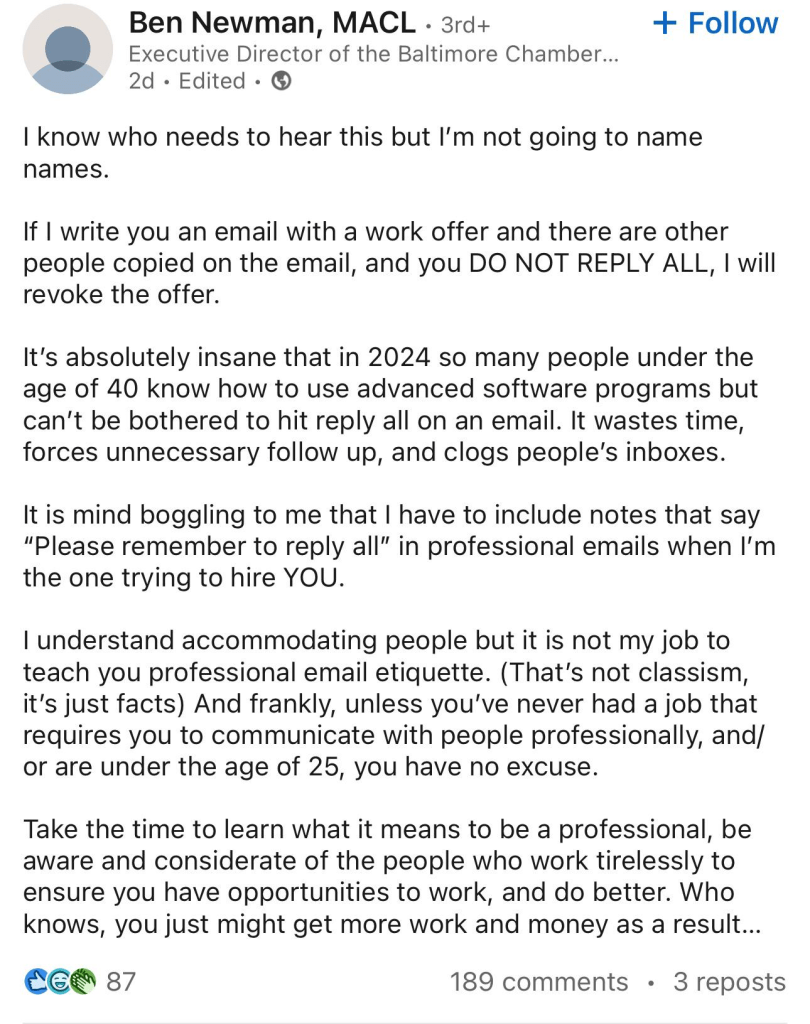
I’ve been working part time at a smaller company for a decent amount of time. Now that it’s summer, I’m going full time. Even though I’m well past being a beginner at my job, my manager still requires me to copy him on every email I send, whether it’s asking other people on the team questions, reaching out to people on other teams, or asking for people to review certain things. My manager is very hypercritical of me and recently this has made it extremely stressful to send any emails at all, because I don’t want him to see them and think I’m asking a stupid question or that I’m “bothering someone” or find some mistake that doesn’t exist. In addition, he will respond to emails that are directed at me which is also very frustrating. Is this a normal experience for engineering interns?
So as I mentioned in the title and EIT who used to work for reached out (through another person) to ask if I could be their reference. He was a nice guy and smart but I wouldnt call him very good at his job. The guy seemed very aloof and had horrible time management. He would show up late, take long lunches, and then leave early. He was also pretty slow at completing tasks, where it got to the point that people stopped giving him work because he would take too long and sit on budgets. Ultimately he was let go, which I think was appropriate as he was give multiple (like 4 opportunties to show improvement).
In the couple of years since he was let go, he passed his PE but hasnt found another job. Part of me just wants to tell him Im not comfortable using him as a reference. But at the same time, the engineering community where I live is pretty small, so Im torn between being so harsh.
At my land development firm (~1000 employees) we have a group of experienced engineers that do primarily plan review. Every project goes through them and they check plans and calcs for constructability, safety, and look for VE opportunities. It seemed interesting to me as an alternative path to climb the ladder in lue of project management.
I wanted to see if other firms have a similar role and how many years of experience the typical engineer in this position has? If you’ve been in this QC position, how have you liked it
I’ve been talking to this woman at my work for several months. However this other coworker of mine told me that she found out we’ve been talking and she’s now basically threatening me that she’s gonna tell my gf.
I obviously don’t want my gf to know this and I also don’t want the potential problems this may cause at my current office and my career in general. What should I do here?
Something I can’t help but notice is Mechanical Engineering doesn’t have any “high earners”. Basically every mechanical engineer earns somewhere between 70-130k, companies don’t seem to be willing to pay a super experienced guy 200 or 250k like they are in many other fields.
I also notice there’s basically no Mechanical Engineers that ever post in threads like these:
Went over budget on a report (PM let me hear about it when I already knew). Plotter stopped working mid print for a hard copy submittal at the end of the day. Because I spent so much time on the hard copy submittal I didn’t get anything else done that I wanted to. CAD was a POS. All of this happened on a Friday… just a bad end to the week.
Hey guys. How do you overcome the guilt of working from home. Our work policy is maximum 2 days a week working from home. I have a bad cold so I’m probably gonna work from home today, tomorrow and Friday. I’m pretty sure I’m being irrational about getting in trouble but how do you get over the worry of this?
I usually work from home once a week, sometimes twice.
I’m an EE and the due to the busyness of the program, i usually just work from home once a week
Don’t miss a blog post or a podcast episode, subscribe to my newsletter on www.ENGRingSuccess.com Support the on podcast on Spotify or on Patreon:






 ENGineeRing Success Podcast