Building Your Personal Brand: The Key to Standing Out in Today’s Job Market


In today’s competitive world, it’s essential to build and maintain a strong personal brand. Your personal brand is the image and reputation that you project to the world, and it can have a significant impact on your personal and professional life. Here are a few reasons why you should invest time and effort into understanding and building your personal brand:

  1. Stand out from the crowd: In a crowded job market, a strong personal brand can help you stand out from other applicants. Your personal brand can showcase your unique skills, experience, and personality, making you a more compelling candidate.
  2. Build trust and credibility: A strong personal brand can help you build trust and credibility with others. When people perceive you as an expert in your field or a trustworthy and reliable individual, they are more likely to want to work with you or recommend you to others.
  3. Increase your visibility: Your personal brand can help you increase your visibility and reach a wider audience. By building a strong online presence and engaging with others in your industry, you can expand your network and attract new opportunities.
  4. Control your narrative: By proactively managing your personal brand, you can control how others perceive you. Instead of leaving it up to chance, you can create a consistent and positive image that reflects your values and goals.

Investing in your personal brand is a smart move that can pay off in numerous ways. By taking the time to understand and build your personal brand, you can set yourself apart from others, build trust and credibility, increase your visibility, and control your narrative. So, start today and take control of your personal brand. Fired up about your personal brand? Take the next step by listening to my latest interview with Steph Gillies about that exact topic… oh how convenient 🙂


Want more? Subscribe to me on Youtube:

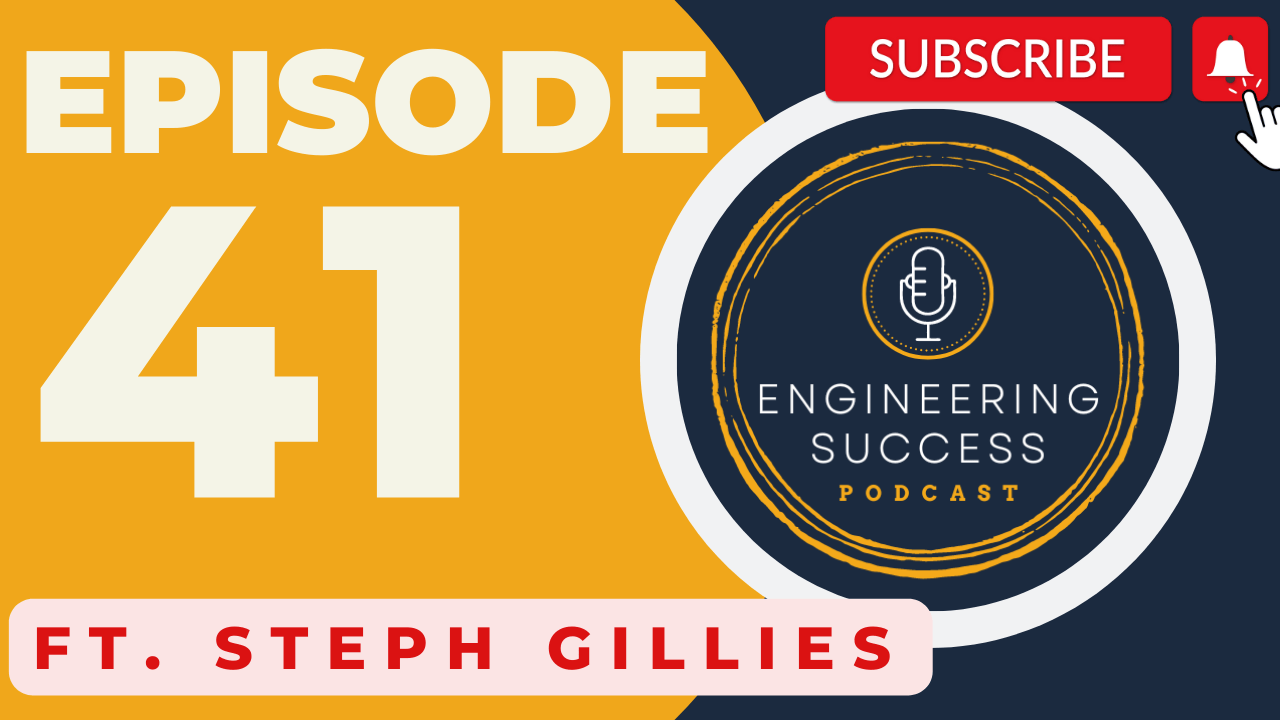
EP 41. Engineering your Personal Brand w/ Steph Gillies of Avant Career Services

I had a blast interviewing Steph and she quite literally blew my mind when she shared a super insightful fact about LinkedIn! (I’m going to make you listen to the podcast to find out what I’m referring to though.)

Steph has an extensive background in career coaching and resume development, and provides those services through her business – ⁠Avant Career Services (www.StephGillies.com)⁠. She is an expert in helping her clients craft a “Career Story” and land the jobs that they aspire to!  I’m so excited to have her on the podcast to share her experience and give some actionable advice for aspiring and early career engineers out there!

We talk about the importance of, how to develop and how to leverage your personal brand through resume development, social media and during interviews as you advocate for your own career development!

Everything Else

Don’t miss a blog post or a podcast episode, subscribe to my newsletter on ⁠⁠⁠⁠www.ENGRingSuccess.com⁠⁠⁠⁠ Support the on podcast on Anchor or on Patreon: ⁠⁠⁠⁠https://www.patreon.com/ENGRingSuccess⁠⁠⁠⁠ Top tier supporters – shout out each episode of the month for $10 monthly donation. Follow along on all social medias: ⁠⁠⁠⁠https://linktr.ee/ENGRingSuccess⁠⁠⁠⁠ To submit your question, email ⁠⁠⁠⁠daniel@ENGRingSuccess.com⁠⁠⁠⁠ Subscribe on YouTube to watch short excerpts of podcast episodes addressing specific topics: ⁠⁠⁠⁠https://www.youtube.com/channel/UCj86alc3a7_A_PibgYpkWFg ⁠ ⁠⁠⁠ Daniel is a Mechanical Engineering graduate of Trinity University’s B.S. in Engineering Science and currently works in Commercial Management in the Engineering and Construction Consulting Industry. All views expressed on this podcast are his own and do not reflect the opinions or views of his employer. Music by Maxgotthetracks: ⁠⁠⁠⁠https://open.spotify.com/artist/0Pclog68AY1⁠⁠

The Most Common Interview Questions That You Need Stories For, and How to Respond to Them


As an early career engineer, you might feel nervous about job interviews, especially if you haven’t had much experience with them yet. However, there are ways to prepare yourself for interviews that can help you feel more confident and prepared.

One effective strategy is to come up with stories that demonstrate your skills and experience in response to common interview questions. The reality is, that most in-person (non-technical) interviews are the same, and the better prepared you are with stories to share your successes, the better you will fare in these interviews. In this post, we’ll go over the most common interview questions that require stories, and give you some tips on how to respond to them effectively.

Common Interview Questions That Require Stories

Here are some of the most common interview questions that you’ll likely encounter during your job search, and why they require stories:

  1. Tell me about a time when you faced a challenge and how you overcame it.
  • This question tests your problem-solving skills and resilience. You need to provide an example of a difficult situation you faced, how you approached it, and what the outcome was. Resilience is a big thing here. They want to know that your first response to a challenge is not to give up, or rely on someone else to get you a solution – they want to see that you have those oh-so-famed problem solving skills that you should have after graduating from an engineering program!
  1. Describe a situation where you had to work in a team to achieve a goal.
  • This question assesses your teamwork and collaboration skills. You need to share an example of a project or task where you worked with others to achieve a specific goal. There are different variations of this question like, “tell me about a time where you dealt with a team member that you disagreed with or had conflict with”. They want to know that not only are you a team player, but that you’ll fit on the teams they put you in, and be an asset to a team, not a distraction.
  1. Give an example of a time when you showed leadership or took initiative.
  • This question evaluates your leadership potential. You need to provide an example of how you took charge of a situation or took initiative to improve a process or project. Additionally, it shows that if you see something that is wrong, you’ll speak up about it. It shows your inquisitive mind and that you’re not just a robot, doing exactly as you’re told, but instead that you’re a critical thinker.
  1. Tell me about a time when you made a mistake and how you learned from it.
  • This question assesses your ability to reflect and learn from your mistakes. You need to share a specific mistake you made, how you addressed it, and what you learned from the experience.
  1. Describe a project or accomplishment that you’re particularly proud of.
  • This question evaluates your achievements and what you’re capable of. You need to share a specific project or accomplishment that demonstrates your skills and experience.

How to Respond to Interview Questions with Stories

To respond to these questions effectively, it’s helpful to use the STAR method:

  • Situation: Briefly describe the situation or problem you faced.
  • Task: Explain what task or goal you had to accomplish.
  • Action: Describe the action you took to address the situation or achieve the task.
  • Result: Share the outcome or result of your actions, including what you learned or accomplished.

Here are some additional tips for crafting effective stories during interviews:

  • Focus on outcomes: Be sure to emphasize the results of your actions and what you accomplished.
  • Keep it concise: Try to keep your stories brief and to the point, while still providing enough detail to illustrate your experience.
  • Be positive: Avoid using negative language or dwelling on mistakes or failures. Focus on how you overcame challenges and achieved your goals.

Listen to the latest episode of the ENGRing Success Podcast on your preferred podcast provider or embedded here!

From Desk Job to Dirt Work: What I Hope to Learn from Working in the Field

Daily writing prompt
What’s a job you would like to do for just one day?

What’s a job you would like to do for just one day? Well thanks WordPress for asking… here’s my take.

Throughout my career in the construction industry, I’ve primarily worked in office roles related to project controls, change management, and contract management. While these roles have been crucial in the success of our projects, I’ve always felt a bit disconnected from the actual work that takes place on the job site, even as someone that currently works on the job site and spends as much time as I can out in the field already. That’s why I would want to spend some time in the field doing manual labor – even if it’s just for one day.

As a leader, I think it’s essential to be able to relate to your team members’ experiences in the capacity that they’re being managed in. And while I may understand the technical aspects of construction projects and how they’re managed, I can’t fully grasp what it’s like to be working in the field every day. I have been able to spend a significant amount of time in the field over the last year, but I do think it does become a different experience when you’re actually the one doing the work.

That’s why I’d like to take at least a day to work alongside our field employees, doing manual labor and experiencing firsthand what it’s like to be part of the crew. By doing so, I hope to gain an even deeper perspective and appreciation for the work that our field employees do. I believe that by understanding their experience, I’ll be better equipped to make informed decisions and offer solutions that are rooted in their reality. That being said, I realize that being able to do this is a luxury – as projects are time-driven, and it would take the right situation for me to be able to do this while not taking away from my daily responsibilities, and for me to be working in a manner that doesn’t distract the team from completing their tasks along the way. I think I can handle that, but again… needs the right situation.

I’m not going into this experience thinking that I’ll become an expert in a single day. That’s why I would rather do it for longer than a day. However, I do hope to gain enough context to help me better understand what and how much our field employees are capable of. I want to learn about the challenges they face, and the solutions they come up with to overcome them. By doing so, I hope to gain a greater appreciation for their work and be better equipped to lead them.

Working in the field for a day may seem like a small gesture (and done poorly it can result like this, but I believe it can have a significant impact on how we lead our teams. By taking the time to experience what our employees do on a day-to-day basis, we can gain a deeper appreciation for their work and be better equipped to lead them to success. I encourage other leaders in the construction industry to consider taking a day to work in the field and gain a new perspective on the industry we all work in.


Listen to the latest episode of the ENGRing Success Podcast on your preferred podcast provider or embedded here!

From Canada to the US: The Legacy of the Iron Ring and the Order of the Engineer

The Iron Ring is a symbol of pride and commitment among engineers in Canada, and the Order of the Engineer is a similar organization in the United States. These organizations serve to remind engineers of their responsibility to society and to uphold ethical standards in their work. If you’re a high school student considering a career in engineering, you may be wondering what the Iron Ring and the Order of the Engineer are all about, and why you might want to participate in the ceremonies associated with these organizations.

The Iron Ring

The Iron Ring is a tradition that began in Canada in 1922, after the collapse of a bridge over the St. Lawrence River caused the deaths of 75 construction workers, many of whom were engineers. To honor the memory of those who lost their lives, a group of Canadian engineers created the Ritual of the Calling of an Engineer, which includes the wearing of a small iron ring on the little finger of the working hand.

The ring is a constant reminder to engineers of their obligation to society and the need to maintain high ethical standards in their work. It is a symbol of the pride and responsibility that comes with being an engineer.

The Ritual of the Calling of an Engineer is a private ceremony that is only open to those who have graduated from an accredited engineering program in Canada. The ceremony is conducted by senior engineers, who present the candidates with their iron rings and administer an oath to uphold the values of the engineering profession.

The Order of the Engineer

The Order of the Engineer is a similar organization in the United States, established in 1970. The organization’s mission is to promote the ethical and moral character of the engineering profession, and to foster a sense of pride and responsibility among engineers.

Like the Iron Ring ceremony, the Order of the Engineer ceremony involves the taking of an oath and the wearing of a ring as a symbol of the engineer’s commitment to ethical behavior and social responsibility. The ring worn by members of the Order of the Engineer is made of stainless steel and is inscribed with the organization’s symbol.

The ceremony is open to engineers who have graduated from an accredited engineering program in the United States, and who have been invited to participate by a current member of the Order of the Engineer.

Why You Should Get Involved

Participating in the Iron Ring or the Order of the Engineer ceremony can be a powerful experience for aspiring engineers. These organizations remind engineers of their responsibility to society and their obligation to maintain high ethical standards in their work. By taking part in the ceremony and wearing the ring, you demonstrate your commitment to the profession and your dedication to the values that make engineering such an important field.

If you’re interested in getting involved, talk to your professors or mentors about how to participate in the Iron Ring or the Order of the Engineer ceremony. You can also learn more about these organizations by visiting their websites:

Remember, being an engineer is about more than just designing and building things. It’s about making a positive impact on the world and being a responsible member of society. By participating in the Iron Ring or the Order of the Engineer ceremony, you can show your dedication to these values and help build a better future for everyone. I still wear my ring proudly!


Listen to the latest episode of the ENGRing Success Podcast on your preferred podcast provider or embedded here!

RSS Error: A feed could not be found at `https://spotifyanchor-web.app.link/e/FgTmOBrx1yb`; the status code is `200` and content-type is `text/html; charset=utf-8`

Ep. 40 – How I Got Here with Tyler Robbins – Vibrations Test Engineer Subject Matter Expert

by Daniel Dahlinger

Tyler Robbins was a phenomenal guest. Must listen for anyone considering going the masters route, or interested in working in R&D/Product Development! Lots of insights from his experience doing research, testing, in-house product development and consulting!

WANT TO WATCH ON YOUR PREFERRED PODCAST PROVIDER?

We had so much fun – maybe too much fun – doing this interview, but you’ll enjoy listening to it!

In this episode of the Engineering Success Podcast, we sit down with Tyler Robbins, a senior vibrations engineer with extensive experience in the industry. Tyler shares with us his career journey, from his early beginnings in engineering to his current role at SimuTech Group, an ANSYS certified elite channel partner. He talks about his education, including his double major in Mechanical Engineering and Decision Science, and how his Master’s degree in Mechanical Engineering has opened doors for him in his career. Tyler also reflects on his different roles in various companies, including his current role as a Senior Test Engineer, and shares insights on how he chose his employers and what he learned from each experience.

Tyler gives valuable career advice to those just starting out in their engineering career or considering pursuing a degree in engineering or a Masters degree. Join us as we delve into Tyler’s career progression, his day-to-day work, and the lessons he’s learned along the way. Whether you’re a seasoned engineer or just starting out, this episode is sure to offer valuable insights and advice.


THE REDUX

Don’t miss a blog post or a podcast episode, subscribe to my newsletter on ⁠⁠⁠www.ENGRingSuccess.com⁠⁠⁠

Support the on podcast on Anchor or on Patreon: ⁠⁠⁠https://www.patreon.com/ENGRingSuccess⁠⁠⁠ Top tier supporters – shout out each episode of the month for $10 monthly donation.

Follow along on all social medias: ⁠⁠⁠https://linktr.ee/ENGRingSuccess⁠⁠⁠

To submit your question, email ⁠⁠⁠daniel@ENGRingSuccess.com⁠⁠⁠

Subscribe on YouTube to watch short excerpts of podcast episodes addressing specific topics: ⁠⁠⁠https://www.youtube.com/channel/UCj86alc3a7_A_PibgYpkWFg  ⁠⁠⁠

Daniel is a Mechanical Engineering graduate of Trinity University’s B.S. in Engineering Science and currently works in Commercial Management in the Engineering and Construction Consulting Industry. All views expressed on this podcast are his own and do not reflect the opinions or views of his employer.

Music by Maxgotthetracks: ⁠⁠⁠https://open.spotify.com/artist/0Pclog68AY1⁠⁠

Ep 39. Things that don’t belong on LinkedIn; How to Interview; Resume Job Titles; Remote Job Bait and Switch; Backpay for School; Hardest Engineering Class

by Daniel Dahlinger

Episode 39 of the ENGRing Success Podcast

To submit your question, email ⁠⁠⁠⁠daniel@ENGRingSuccess.com⁠⁠⁠⁠

LinkedIn Lunatics/Career Craziness

⁠⁠1. Seeking Ladies???⁠

⁠⁠2. Was asked for my college transcripts, from 15yrs ago⁠

⁠3. What has LinkedIn become? 🤦‍♂️⁠

⁠4. Basically “Paid-in-exposure” with extra steps.⁠

⁠5. I should have to pay my employees⁠

Career Advice

⁠⁠6. I’ve interviewed and hired hundreds of people.⁠

⁠⁠7. Does anyone else on here prefer NOT to prepare for interviews?⁠

⁠8. Offered a salary of $105K for a large contractor in LA. Is this reasonable? I have experience of 4 years in Heavy Civil and educational background of BS in Civil Engineering and MS in Construction Engineering. Need tips on negotiating.⁠

⁠9. On my resume, I change my previous job titles to popular names since I feel like it’s easier for people to understand my work experience. Is there any problem with that?⁠

⁠10. Dozed off in a zoom meeting with a client⁠

⁠11. Messed up by looking for a new job?⁠

⁠12. Help with Internships⁠

⁠13. Interviewed for a remote job, now asking if I’d be willing to relocate?⁠

⁠14. Ex employer wants paid back for school⁠

College Advice

⁠⁠⁠15. Would you say calculus were the hardest courses in your program?⁠

⁠⁠⁠16. U of M for 20k a year or Michigan Tech for 12k a year⁠

⁠⁠17. I have a dynamics exam in a couple of hours…⁠

⁠18. Should I be aspiring to transfer to a more prestigious school? Or does prestige not really matter for engineering for finding a job (international student)⁠

Subscribe on YouTube to watch short excerpts of podcast episodes addressing specific topics: ⁠⁠⁠⁠https://www.youtube.com/channel/UCj86alc3a7_A_PibgYpkWFg  ⁠⁠⁠⁠

prefer to watch on video?

Daniel is a Mechanical Engineering graduate of Trinity University’s B.S. in Engineering Science and currently works in Commercial Management in the Engineering and Construction Consulting Industry.

All views expressed on this podcast are his own and do not reflect the opinions or views of his employer.

Music by Maxgotthetracks: ⁠⁠⁠⁠https://open.spotify.com/artist/0Pclog68AY1⁠⁠⁠


We’re into a great cadence and it will keep on keeping on.

Don’t miss a blog post or a podcast episode, subscribe to my newsletter on ⁠⁠⁠⁠www.ENGRingSuccess.com⁠⁠⁠⁠

Support the on podcast on Anchor or on Patreon: ⁠⁠⁠⁠https://www.patreon.com/ENGRingSuccess⁠⁠⁠⁠

Top tier supporters – shout out each episode of the month for $10 monthly donation.

Follow along on all social medias: ⁠⁠⁠⁠https://linktr.ee/ENGRingSuccess⁠⁠⁠⁠


The Most Important Skill for Fresh Engineering Grads – Insights from a Recruiter/Talent Manager

by Daniel Dahlinger ft. Marc LeVine

As an engineering student, it’s no secret that landing a job or internship can be a daunting task. With so many other students vying for the same positions, it can be difficult to stand out from the crowd. But what if there was one skill that could set you apart and make you a more desirable candidate? In this video, we explore what that skill is and how you can develop it to increase your chances of success.

The video is a snip from episode 38 of the podcast with Marc Levine, an engineering industry expert who has spent years working with students trying to find internships, or their first job. In this episode, Marc shares his insights on what he believes is the most important skill for engineering students to have when looking for internships and post-grad jobs: soft skills.

Without giving too much away, the skill that Marc highlights in the video is one that is often overlooked by students but can make a big difference in their job search. By developing this skill, you can not only make yourself a more attractive candidate to potential employers but also improve your chances of success in your future career.

So, if you’re an engineering student who’s looking to take your job search to the next level, be sure to watch this video and learn from one of the industry’s top experts. You never know, the skill you learn could be the one that lands you your dream job.


Don’t forget to check out the latest episode of my podcast, where I interview Marc LeVine, Talent and Development Leader at Thermosystems USA and share his insights on the engineering hiring industry and best practices when trying to find a job or engineering internship!

How to use ChatGPT to help with goal setting for Performance and Development season!

by Daniel Dahlinger


Performance and development season can be a daunting time for many professionals. It’s a time when you’re forced to think about yourself, your strengths, weaknesses, and goals. For some, the open-ended nature of P&D planning can be overwhelming, making it difficult to know where to start. But what if there was a tool that could help you get started and break the ice of P&D planning? Enter ChatGPT. This AI-powered tool is the perfect companion to help you generate ideas, set priorities, and create a solid plan for your P&D goals. In this article, we’ll show you how to use ChatGPT to kickstart your P&D planning and achieve your career objectives.

Setting performance and development (P&D) goals is an essential part of career growth and advancement. These goals help you focus your efforts, prioritize your tasks, and track your progress. In this article, we’ll show you how to use ChatGPT to help set effective P&D goals for work.

Step 1: Type in your job description and responsibilities To begin, type in your job description and responsibilities into ChatGPT. This will give the AI model an understanding of what’s expected of you in your role and help it provide relevant suggestions for P&D goals.

Step 2: Provide information on your skills and areas for improvement Next, provide information on your skills and areas for improvement. This could include details on your current skillset, knowledge, and abilities, as well as any areas where you could improve or develop new skills to enhance your job performance.

Step 3: Ask for suggestions on P&D goals Using the information you provided in steps 1 and 2, ask ChatGPT for suggestions on P&D goals. You can phrase your request in a variety of ways, such as “What are some P&D goals I can set for myself based on my job responsibilities?” or “What are some skills I should focus on developing to advance in my career?”

Step 4: Evaluate and select goals ChatGPT will provide several suggestions for P&D goals based on your job description, responsibilities, and self-evaluation. Evaluate these suggestions and select the goals that are most relevant and achievable for you. Remember to prioritize your goals based on their importance and relevance to your job.

Step 4.5: Give ChatGPT additional prompting and modify goal recommendations If you’re not satisfied with the goals provided by ChatGPT, you can give it additional prompting to help it better understand what you want to achieve. For example, you could ask for more specific goals related to a particular skill or task. You can also modify the goals provided by ChatGPT to better align with your needs and interests.

Step 5: Create an action plan Create an action plan for each of your selected goals. This plan should outline the steps you need to take to achieve your goals, such as acquiring new skills, seeking feedback, or collaborating with colleagues. Include timelines and milestones to track your progress.

Step 6: Review and revise goals regularly Regularly review your progress and revise your goals if necessary. ChatGPT can also help with this step by providing suggestions for adjusting timelines, modifying action plans, or even changing the goals themselves based on your updates.

By using ChatGPT to help set your P&D goals, you can benefit from the AI model’s knowledge and expertise. Remember to keep your goals SMART, prioritize them, create an action plan, and review and revise them regularly to stay on track. With ChatGPT’s assistance, you can set effective goals that will help you grow, develop, and advance in your career.


Don’t forget to check out the latest episode of my podcast, where I interview Marc LeVine, Talent and Development Leader at Thermosystems USA and share his insights on the engineering hiring industry and best practices when trying to find a job or engineering internship!

How do you unwind after a demanding day?

Daily writing prompt
How do you unwind after a demanding day?

by Daniel Dahlinger


After a long day at work, it’s essential to take some time for yourself to unwind and recharge. Here’s how I like to spend my evenings to help me relax and refocus for the next day.

Dinner with my wife

One of my favorite things to do after a demanding day is to have dinner with my wife. We catch up on each other’s day, discuss upcoming plans and simply enjoy each other’s company. It’s a great way to connect and decompress after a busy day. Usually this is done on the couch, while watching That 70’s Show, and dodging attempts from our dogs to steal a bite of our food.

Take the dogs for a walk

After dinner, I like to take our dogs for a walk. Walking outside and getting fresh air helps me to clear my mind and reduces stress. Plus, our dogs always make me smile and remind me of what’s truly important in life. If it isn’t a walk, then it’s fetch in the backyard… well, fetch with Twyla and Luka just herds. If it’s raining… then indoor fetch is the activity of choice!

Work on my passion project – the ENGRing Success Podcast

Once we’re back home, I like to spend some time working on my passion project – the ENGRing Success Podcast. This project allows me to explore my interests, share my knowledge with others, and connect with like-minded individuals. I find it’s a great way to unwind and focus on something that brings me joy. On the average night, I’ll troll through Reddit and interact with people, schedule social posts for the next day, and add to the script for the next podcast episode. On special nights, I’ll do an interview, like my latest interview with Marc LeVine of Thermosystems USA and The ABCs of Control Systems Engineering.

The Office Before Bed with Bailey Cat

Last but not least, the last bit of my day is when I get to wind down with something familiar – The Office. Watching The Office while hanging out with Maddie and our cat, Bailey, is the perfect mindless activity that allows my mind to follow it’s routine into a calm headspace, and then I’m out like a light!

By following this daily routine, I’m able to disconnect from the stresses of work, spend quality time with my loved ones, and pursue my passions. Everyone’s routine for unwinding after a demanding day will be different, but I encourage you to find what works for you and prioritize self-care. Your mind and body will thank you.

What do you do to unwind after a long day?


Listen to the latest episode of the ENGRing Success Podcast on your preferred podcast provider or embedded here!

Spotify Player:

YouTube:

RSS Error: A feed could not be found at `https://spotifyanchor-web.app.link/e/FgTmOBrx1yb`; the status code is `200` and content-type is `text/html; charset=utf-8`